 #9 of 24
Agents/System
radar
The Operator
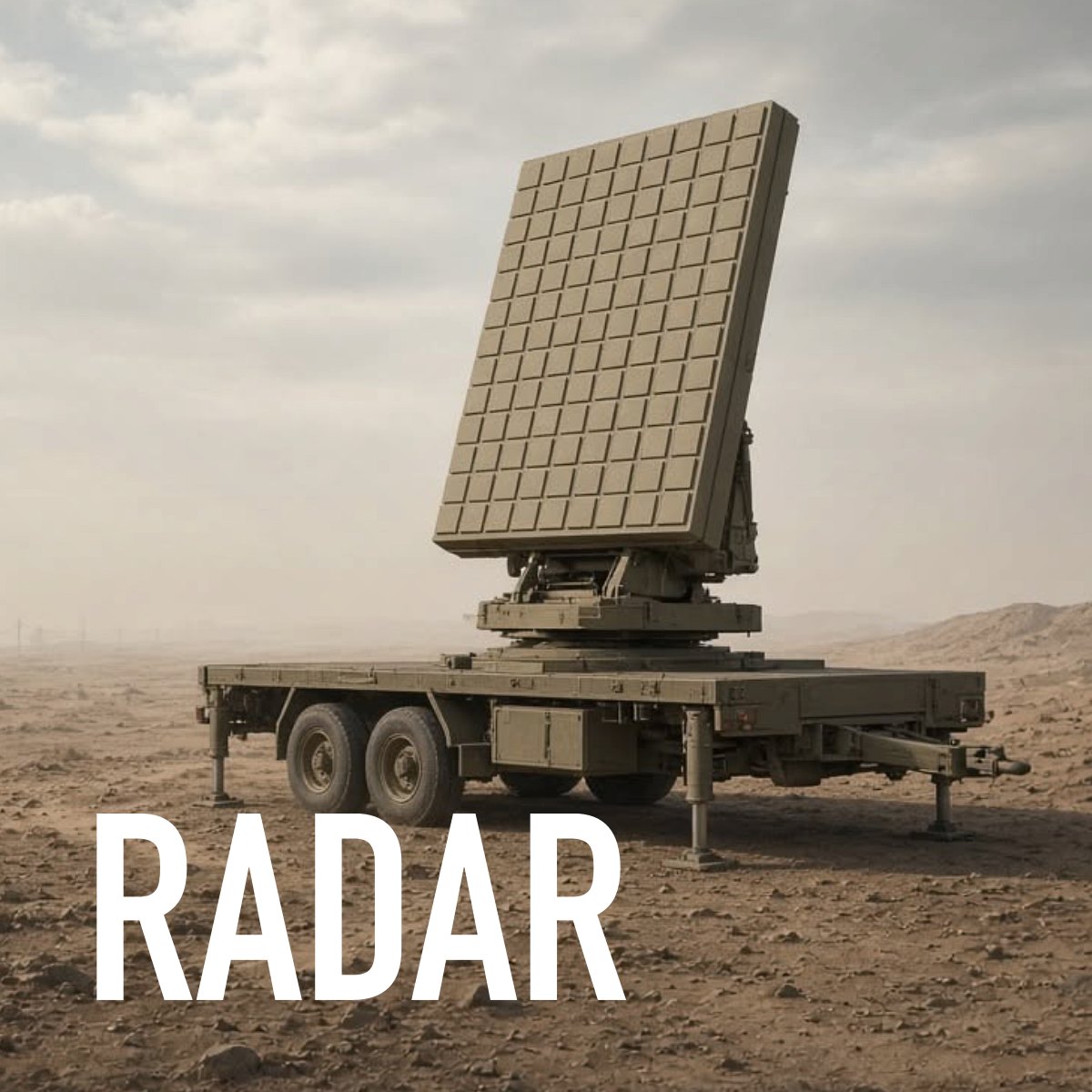
Simulates what a radar operator actually sees: noisy plots, tracks, jamming.
Downloads per day
Last 90 days · 31 total · peak 9
Dossier
What radar does.
Simulates scanning radars for games and simulations: detection from the radar range equation, measurement noise, false alarms, tracking and noise jamming, reproducible from a seed.
From the crate: “Realistic radar and sensor simulation for games and simulations: scanning, probabilistic detection, measurement noise, tracking and electronic warfare.”
- Codename
- The Operator
- Role
- Radar simulation
- Character
- Patient and probabilistic. Never claims to know where you are, only where you probably were one sweep ago.
- Domain
- System
- Enlisted
- 9 October 2026
- Last release
- v0.2.0, 20 November 2026
- Keywords
gamedev,simulation,tracking,sensor,radar
Use cases
Put it to work.
- Give a game or wargame sensors that see noisy, uncertain contacts instead of ground truth.
- Form, coast and drop tracks with alpha-beta or Kalman filters and M-of-N confirmation.
- Add noise jammers and transponder identification to a simulated air picture, replayable from one seed.
Getting started
Call it in.
Add it to a Rust project, then follow the example. The full API is on docs.rs.
Install
cargo add radar
Example
use radar::prelude::*;

fn main() -> Result<(), RadarError> {
    let (radar, site) = (SensorId(1), PlatformId(1));
    let mut sim = Simulation::new(SimulationConfig::default());
    let cfg = RadarConfig::surveillance_2d()?;
    sim.add_radar(radar, site, Pose3::IDENTITY, cfg)?;
    let mut world = WorldSnapshot::new(SimTime::ZERO);
    world.platforms.push(PlatformState {
        id: site,
        pose: Pose3::IDENTITY,
        velocity: Vector3::ZERO,
    });
    world.targets.push(TargetState {
        id: TargetId(1),
        pose: Pose3::from_position_heading(Vector3::new(0.0, 30_000.0, 0.0), 0.0),
        velocity: Vector3::new(150.0, 0.0, 0.0),
        extent_radius: 15.0,
        signature: RadarSignature {
            rcs_m2: 5.0,
            swerling: Swerling::One,
        },
        transponder: None,
        platform: None,
    });
    sim.update_world(world)?;
    for _ in 0..10 {
        // One 4 s antenna revolution: 40 radar updates.
        sim.step_open(SimDuration::from_secs(4))?;
        sim.drain(radar, &mut Vec::new())?;
        println!("t = {:.0} s", sim.now().as_secs_f64());
        for t in sim.tracks(radar)? {
            let (id, status, course) = (t.id, t.status, t.course().to_degrees());
            println!("  {id:?} {status:?} course {course:.0}°");
        }
    }
    Ok(())
}Build with a prompt
Add the Rust crate `radar` (version 0.2.0) to this project with `cargo add radar`. I want to use it for this: Simulates scanning radars for games and simulations: detection from the radar range equation, measurement noise, false alarms, tracking and noise jamming, reproducible from a seed. Before writing code, read its README at https://crates.io/crates/radar and the API docs at https://docs.rs/radar. Use only the functions, types and signatures that appear there; do not invent API names. Write a minimal working example and one test that runs it.
Paste this into Claude Code or another coding agent.
Specs
- Version
- 0.2.0
- License
- AGPL-3.0-only
- Edition
- Rust 2024
- MSRV
- 1.86
- Size
- 7,065 lines of code, 112 of comments
- Package
- 114.0 KB compressed
- Dependencies
- getrandom, rand_chacha, rand_core, serde, thiserror
- Used by
- 0 crates on crates.io
- Features
- diagnostics, entropy, ew, serde, tracking
- Docs
- docs.rs, built
- Repository
- cryptopatrick/radar · 0★ · 0 forks · 0 open issues · pushed 20 Nov 2026
Release history
| Version | Date | Downloads |
|---|---|---|
| 0.2.0 | 20 Nov 2026 | 7 |
| 0.1.1 | 15 Oct 2026 | 12 |
| 0.1.0 | 9 Oct 2026 | 12 |
Documentation
The manual.
The crate's README as published on crates.io. The full API reference is on docs.rs.
Read the README
radar
Realistic radar and sensor simulation for games and simulations.
radar simulates what a radar operator would actually see: a scanning beam,
probabilistic detection from the radar range equation, noisy measurements,
false alarms, tracks that form, coast and drop, transponder identification and
noise jamming. The host owns the world and the clock; the library never sees
your game objects and never hands back ground truth. Every run is
reproducible from a seed.
Quick start
use radar::prelude::*;

fn main() -> Result<(), RadarError> {
    let (radar, site) = (SensorId(1), PlatformId(1));
    let mut sim = Simulation::new(SimulationConfig::default());
    let cfg = RadarConfig::surveillance_2d()?;
    sim.add_radar(radar, site, Pose3::IDENTITY, cfg)?;
    let mut world = WorldSnapshot::new(SimTime::ZERO);
    world.platforms.push(PlatformState {
        id: site,
        pose: Pose3::IDENTITY,
        velocity: Vector3::ZERO,
    });
    world.targets.push(TargetState {
        id: TargetId(1),
        pose: Pose3::from_position_heading(Vector3::new(0.0, 30_000.0, 0.0), 0.0),
        velocity: Vector3::new(150.0, 0.0, 0.0),
        extent_radius: 15.0,
        signature: RadarSignature {
            rcs_m2: 5.0,
            swerling: Swerling::One,
        },
        transponder: None,
        platform: None,
    });
    sim.update_world(world)?;
    for _ in 0..10 {
        // One 4 s antenna revolution: 40 radar updates.
        sim.step_open(SimDuration::from_secs(4))?;
        sim.drain(radar, &mut Vec::new())?;
        println!("t = {:.0} s", sim.now().as_secs_f64());
        for t in sim.tracks(radar)? {
            let (id, status, course) = (t.id, t.status, t.course().to_degrees());
            println!("  {id:?} {status:?} course {course:.0}°");
        }
    }
    Ok(())
}
This is examples/basic_2d.rs (cargo run --example basic_2d). See also
basic_3d (volume scan with elevation) and multi_sensor (two independent
radars). Each sensor's output arrives as Observations: Measurement,
ScanCompleted, TrackUpdated, TrackDeleted and JammingStrobe.
Feature flags
| Feature | Default | What it adds |
|---|---|---|
tracking |
yes | Association, alpha-beta and Kalman filters, M-of-N track lifecycle |
ew |
yes | Noise jammers (J/N in the SNR) and jamming strobes |
serde |
no | Serialize/Deserialize on configs and observations |
entropy |
no | Seed::from_entropy() from the operating system |
diagnostics |
no | A truth-annotated debug channel (Simulation::drain_diagnostics) |
The core (geometry, time, world, sensors, radar, simulation) is always on.
Conventions
- Frame: right-handed world frame, x = east, y = north, z = up.
- Azimuth is a compass bearing: from +y (north), clockwise, in
[0, 2π). Elevation is up from the horizontal plane, in[−π/2, π/2]. - Units: SI everywhere — metres, seconds, radians, hertz, watts, square
metres. Time is integer nanoseconds (
SimTime,SimDuration), so there is no float drift. - Poses: a sensor's mount is relative to its platform; scan angles are
platform-relative by default or world-stabilised (
ScanFrame). - 2D is
z = 0with elevation ignored (Dimension::TwoD). WorldScaleconverts host units and ticks (positions, speeds, durations, angles per tick) to SI at the boundary; the core never sees host units.- Between world snapshots, platform, target and emitter positions are extrapolated linearly from their velocities.
Determinism
- Each sensor draws from its own ChaCha8 stream derived from the master seed
and its
SensorId, in a fixed order (targets by ascendingTargetId, then false alarms, then identification replies, then jamming strobes, then tracking). Samplers are implemented in-crate, so dependency updates do not change streams. - The same seed and the same inputs give an identical observation stream. Adding, removing or disabling one sensor never changes another sensor's output.
Simulation::reset()restores time zero, scan states, tracks and random streams; it also empties the world, so feed it again withupdate_worldbefore replaying.- Limits: bit-exact replay holds for the same binary on the same target
platform. Transcendental functions (
sin,cos,ln,exp) may differ across platforms and libm versions, so cross-platform bit-exactness is not promised. A customrandom_source_factory(for example live hardware noise) makes runs non-deterministic, and custom sensor models or scan patterns keep their own state acrossreset().
Model limitations
- 2D radars report slant range: a
Dimension::TwoDradar measures the full 3D slant range but no elevation, so placing its plots in the horizontal plane biases the ground range outward for targets at altitude. - Single-look detection: each look is an independent square-law decision on one pulse; there is no pulse integration (coherent or non-coherent).
- No clutter, multipath, atmosphere or refraction: the only propagation
effect is host-supplied line-of-sight occlusion (
Environment). - Alpha-beta covariance is approximate: the alpha-beta filter reports a covariance for gating, but it is not a statistically consistent estimate.
- Per-sensor tracking without fusion: each radar runs its own tracker; there is no multi-sensor track fusion.
- Plot-per-dwell association: a sweeping beam yields at most one track-updating measurement per target per dwell; extra looks in the same dwell are absorbed rather than used.
- Tentative age-out: tentative tracks are deleted after
(confirm_n + 1) ×the nominal revisit. A steered beam that revisits more slowly than its slew limit allows needstentative_max_ageset explicitly. - Confident-coverage miss counting: a pass of the beam counts as a miss only if the track's predicted direction was inside the beam by the track's own angular uncertainty (capped at half the half-beamwidth). A track that is only grazed at a beam edge gets no outcome, so an uncertain track near an elevation-bar or sector edge is not driven into coasting, at the cost of detecting real fades there more slowly.
Performance
cargo bench (benches/radar_2d.rs): one step(100 ms) of a
surveillance_2d radar against 1 000 targets spread uniformly within 90 km
takes about 430 µs (≈ 2 300 updates/s, against a target of 60) on an
Apple M2 with rustc 1.99, release profile.
License
This project is licensed under the GNU Affero General Public License v3.0 only (AGPL-3.0-only). See LICENSE for details.
Resources
Same unit
Other agents.
-
 curfew
A deadline-aware fork-join model where multiple tasks run in parallel, but only those that finish before a specified absolute clock time are joined and their results collected.
-
 graph_mvcc
Rust library for working with Multi-Version Concurrency Control in Graph Databases.
-
 harel
Harel Statecharts Parser.
-
 minifix
A bare essentials library for Financial Information Exchange (FIX)